
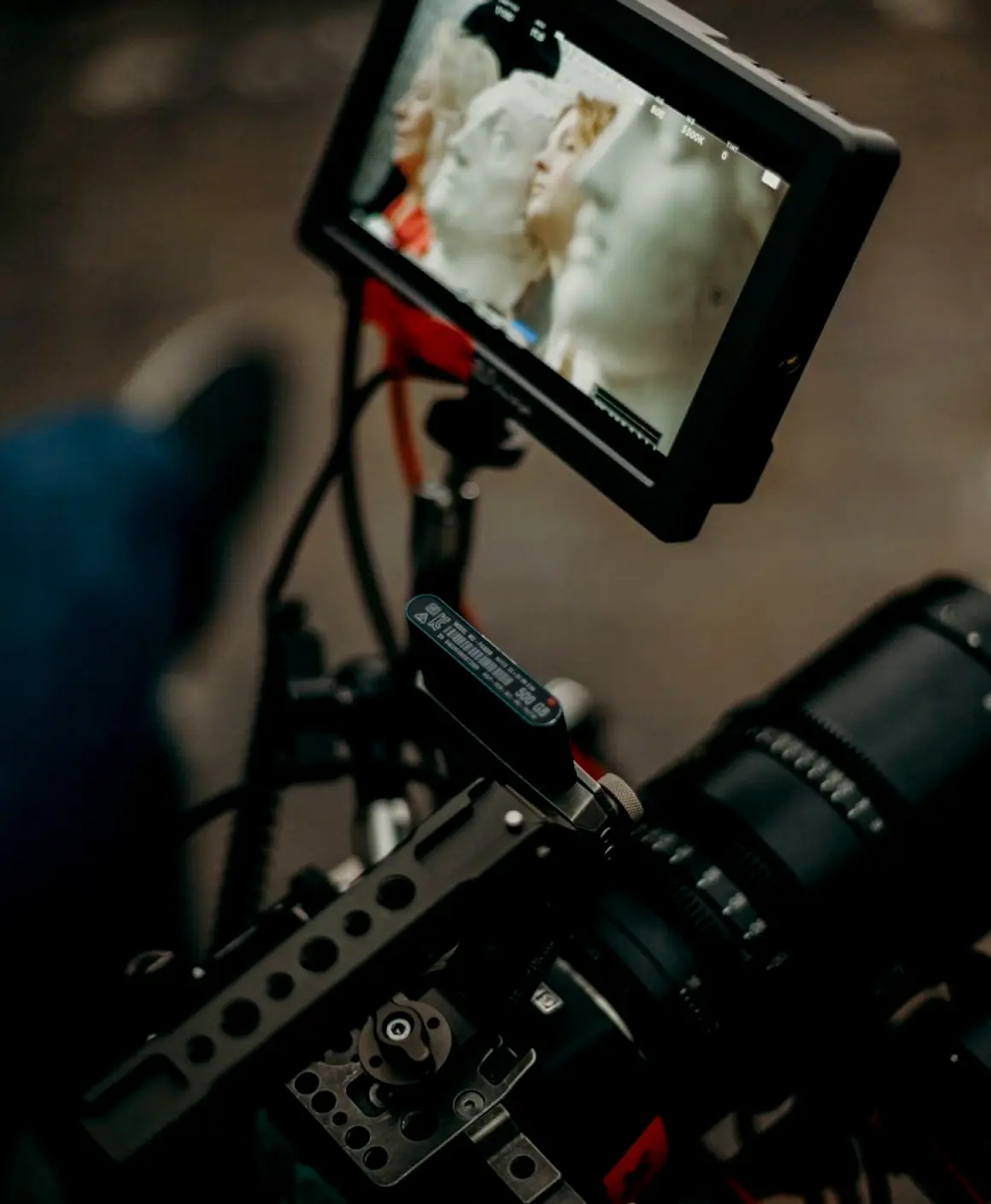
The two options on the table
Most producers who come to us for studio time are really choosing between two set-ups. The first is a single camera, framed once and left alone, with a presenter or guest talking straight down the lens. The second is a multi-camera recording, usually three cameras, with a director cutting between them live or marking cuts for the edit. Both are legitimate ways to make a bulletin, and both can look clean when they are done carefully.
The difference is not about quality in the abstract. It is about what the item needs to do. A forty-second read of a developing story asks very little of a studio. A six-minute conversation between a presenter and a guest asks a great deal more, because the audience needs to see reactions, hear the question and feel the pace of the exchange. This note sets the two side by side and ends with a recommendation we give most clients.
What a single camera does well
A single camera is quick to light, quick to line up and easy to staff. One operator, one sound recordist and a presenter with an autocue can be recording within an hour of arriving in the room. There is no gallery to run, no vision mixer to brief and no continuity to worry about between angles, so there is very little that can go out of sync.
It also suits material that will be cut hard afterwards. If the item is a short piece to camera, a headline read or a statement that will sit under graphics, a locked-off wide or medium shot gives the editor a clean master and nothing to match. The cost is flexibility. If the presenter stumbles, the cut has to hide it, and any jump in the shot is visible because there is no second angle to cover it.
- Fast set-up and a small crew
- Clean master for short reads and statements
- Few points where timing or continuity can fail
What multi-camera adds
With three cameras on a set, a wide shot holds the whole scene while two tighter cameras follow the presenter and the guest. The director chooses the angle that fits the moment: the question on one face, the answer on another, a wide to settle the picture. That is what gives an interview its rhythm, and it is hard to fake from a single angle afterwards.
The second benefit is protection. When a presenter fluffs a line, there is always another angle to cut to, so a take can often be rescued without a retake. Multi-camera recording also lets us run a bulletin close to live, with the director calling shots as the presenter reads. The price is time and people: more lighting to balance, more cameras to match in colour and more crew in the room.
- Reaction shots and natural pacing in interviews
- Cover for mistakes without stopping the recording
- Close-to-live direction for full bulletins
Where each one goes wrong
Single-camera recordings go wrong when they are asked to carry too much. A long two-way conversation filmed from one angle looks static within thirty seconds, and the editor ends up with punch-ins that soften the picture. Producers then blame the guest, when the fault was the set-up.
Multi-camera work goes wrong in a different way. If the cameras are not matched, a cut from one to the next shows a change in skin tone or brightness, and the audience notices before they can say why. A director who cuts too often makes a quiet interview feel nervous. Autocue speed also matters more with several cameras, because the presenter's eyeline has to stay with the lens the director has chosen, or the picture looks as if they are reading from somewhere else.
How to decide for your own item
Start with the length and the number of voices. One speaker for under a minute points to a single camera. Two or more speakers, or any item long enough that the viewer will want to see someone listen, points to multi-camera. Then look at the delivery: a package that goes to air within the hour benefits from a directed recording, because there is little time to build a cut from scratch.
Think about repeat use as well. A bulletin that is recorded every week with the same set and presenter repays the extra set-up of three cameras, because the lighting and positions can be repeated from notes. A one-off statement does not. Finally, be honest about the edit capacity you have. A single-camera master is cheap to record but may cost more editing time if the item is long.
- Under a minute, one voice: single camera
- Interviews and full bulletins: multi-camera
- Weekly recurring format: multi-camera, with set-up notes kept
Our recommendation
For most news teams we recommend multi-camera recording for anything that includes a guest, and a single camera for short reads and statements. It is the combination we use most often ourselves, and it keeps the extra cost where it is felt by the viewer rather than spreading it across every item.
If you are unsure, tell us the running time, the number of speakers and when the item has to be delivered, and we will say which set-up we would book and why. Sometimes the honest answer is to record the main interview on three cameras and the short link on one in the same session, which uses the same lighting and keeps the day tidy.
A single camera is the sensible choice for short, tightly scripted reads, and multi-camera is worth its extra crew whenever two people talk or the item has to go out quickly. Our usual advice is to book a directed set-up for interviews and keep one-voice items simple. Send the running time and speaker count through the contact page and we will confirm which arrangement fits before you commit to a studio day.