
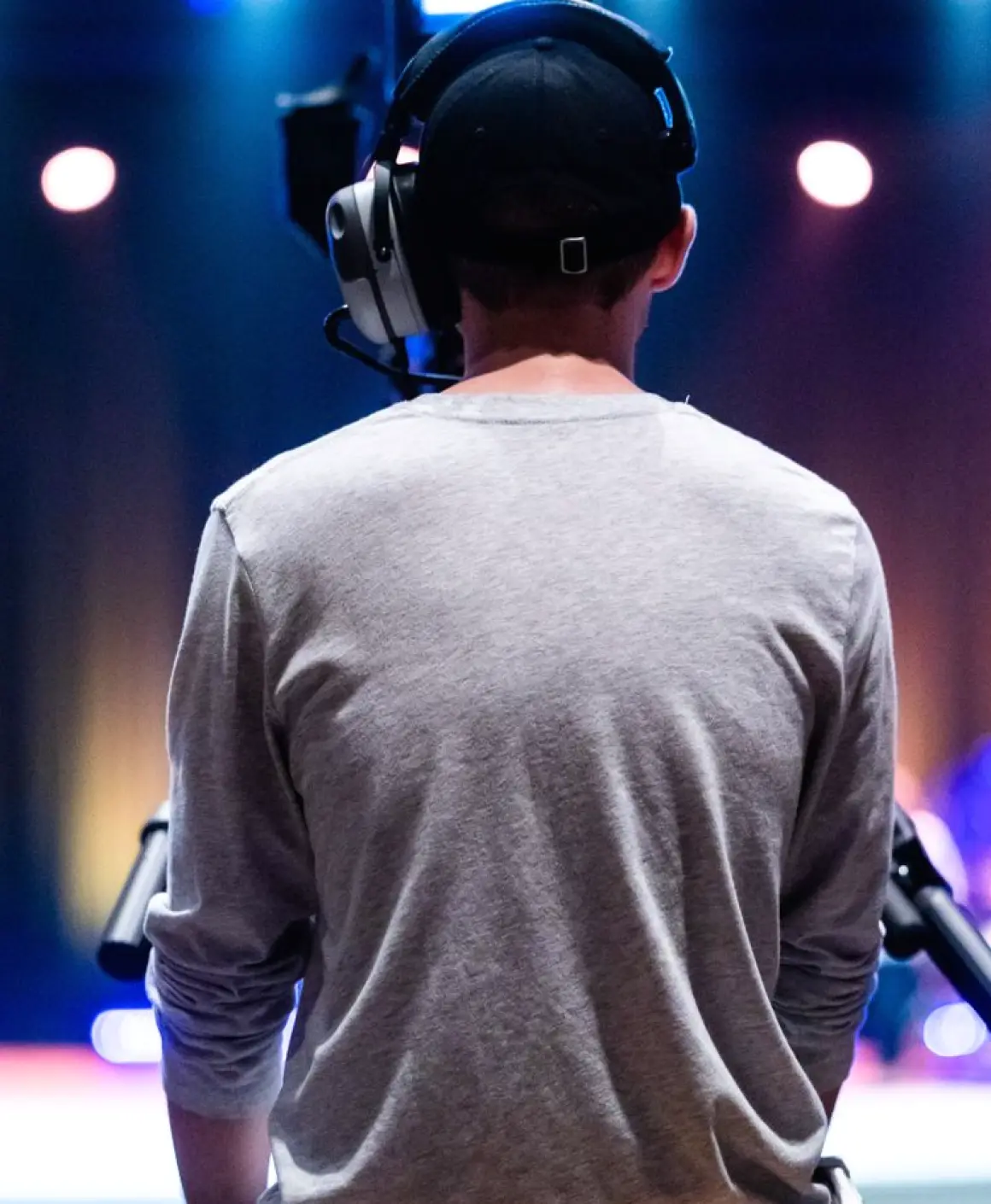
Starting with a kit that never changes
When a story is developing, nobody wants to think about equipment. Our crews work from a fixed camera kit: a shoulder-mounted broadcast camera, a lighter backup body, two radio microphones, a stick microphone, a compact light and a tripod that sets up in under a minute. The contents of the bag are the same on every job, and they sit in the same pockets. That sounds dull, but it means a camera operator can reach for a cable in the dark at the roadside without looking.
From the edit chair, I see the benefit later. Footage that arrives with consistent frame rates, matching audio levels and clean slates is far quicker to cut than footage shot on mixed settings. Every minute saved in the field is a minute I can spend on the script and the captions.
We replace batteries and cards on a schedule rather than when something fails, and we check the backup body before every shift, not only after a problem.
- Same bag layout on every job
- Backup camera body checked each shift
- Batteries and cards swapped on a schedule
Shooting for the edit, not just for the moment
Daniel Whitcombe trains our camera operators to shoot with the cutting room in mind. That means holding a shot long enough to be used, leaving a few seconds of settled frame before and after any movement, and capturing cutaways that let an editor shorten a statement without a jump. A wide, a medium and a close detail of the same scene give me three ways to build a sequence.
Handheld work is kept stable by technique rather than gadgets: elbows in, weight spread, slow breathing on the long takes. Shaky footage is hard to rescue under deadline, and no software fully repairs it. We would rather spend ten extra seconds finding a steady position than ten minutes in the edit stabilising a bad shot.
Natural sound matters too. A clean ten-second recording of the scene, with no voices over it, saves many awkward audio fixes later.
- Hold each shot before and after movement
- Wide, medium and detail of every scene
- Record clean ambient sound for the edit
Moving footage without losing any of it
A news clip is only useful if it reaches the edit suite intact. Our crews offload cards to two separate drives on location wherever a laptop can be set up, and cards are not wiped until the editor confirms the material has arrived and plays back. It is a simple rule, and it has saved us from the sort of silent corruption that otherwise surfaces at the worst moment.
Where the connection allows, proxy files travel first. These are small, light copies that let me begin cutting while the full-quality files are still on their way. When they land, the edit relinks to them automatically and nothing needs rebuilding.
File names follow one pattern: story, date, camera and clip number. It is unglamorous, but nobody has ever lost a clip named properly, and a sound clip with a clear name is easy to find under pressure.
- Two drives before any card is cleared
- Proxy files travel ahead of full-quality files
- One naming pattern for every clip
Edit templates that remove repeated decisions
In the edit suite, speed comes from not deciding the same thing twice. We keep project templates with the timeline already laid out: a track for the reporter's voice, tracks for interview sound, natural sound and music, plus a locked layer for captions and lower-third graphics. Loudness settings and export presets for broadcast and online sit beside them, so nothing is set up from scratch on a busy afternoon.
A typical package follows a steady order. I start with the strongest line from the interview, lay the voice track, then add pictures to cover it, and only then touch graphics. Working in this sequence means that if time runs out, what exists is already a usable piece rather than a half-polished fragment.
Captions are written as I cut, not left to the end. They are checked against the audio once, then again by a second pair of eyes.
- Templates with tracks and presets prepared
- Strongest line first, graphics last
- Captions written during the edit
A second pair of eyes before anything leaves
Fast does not excuse a mistake on air. Before a package is delivered, someone other than the editor watches it from start to finish. They check names and spellings against the producer's notes, confirm that every claim in the script matches what the interview actually says, and listen for audio that jumps between shots. Helen Marsh keeps this step on the schedule even when the clock is tight, because a correction after broadcast costs far more time than a two-minute review.
Fairness is part of the checklist as well. If a story names a person or an organisation in a critical light, we confirm that a response has been sought or that the script says plainly it has not yet been received. The wording is checked, not assumed.
The final check covers format: frame rate, loudness, caption file and run time against what the producer asked for.
- Independent viewing of the whole package
- Names and facts checked against notes
- Format, loudness and run time confirmed
Delivery, and what we keep afterwards
Delivery depends on what the channel needs. Some teams want a finished file in their broadcast format, others want a version cut for online use with burned-in captions, and many want both. We prepare the master first and derive the others from it, so the pictures and sound are identical across versions and only the framing and caption treatment change.
Files go over secure transfer, and we confirm receipt rather than assuming it. Producers get a short note with the run time, any caveats about the footage and the names of those who appear, so the bulletin team can write their own links without opening the file.
After delivery, we keep the project and raw material for a period agreed with the client, so a follow-up story can reuse earlier pictures without a fresh shoot.
- Master first, other versions derived from it
- Receipt confirmed after every transfer
- Project kept for agreed period for follow-ups
None of this is clever, and that is the point. A breaking story is not the time to try an unfamiliar method. The kit is the same each time, the footage is shot for the edit, files are copied twice, templates remove repeated choices and a second person watches before delivery. These habits are what let a small crew turn a developing story into something a bulletin can trust within hours.